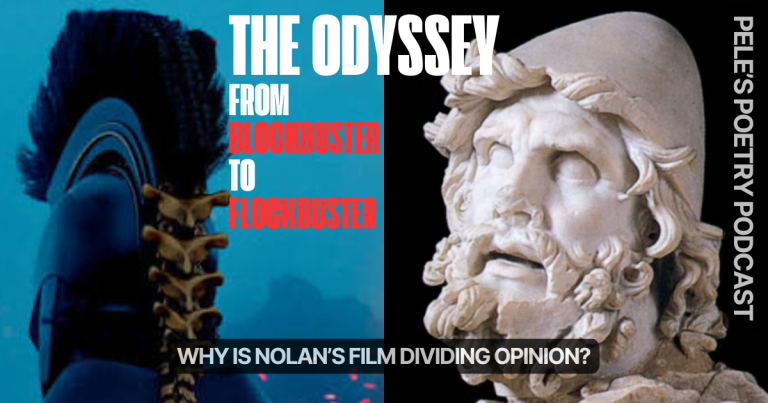
Pele’s Poetry Podcast: Episode 4 – finding your voice

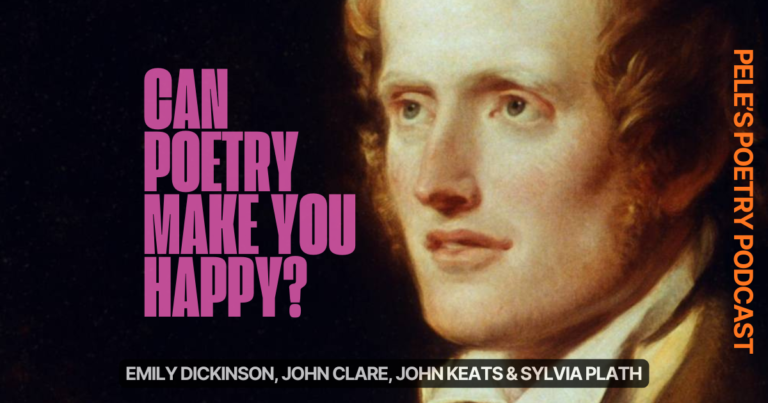
What is poetic voice? Is it synonymous with style? Or something else? Perhaps the poet’s “take” on the world? Pele Cox and Rich Uridge seek answers from a range of greats including Emily Dickinson, Edna St Vincent Millay and Vernon Watkins who, with a drunken Dylan Thomas, tripped over a feather!

Poets
Further reading

Gemini Books Women in Poetry series is available to pre-order or buy here.

Recent episodes

Pele’s Poetry Podcast: Episode 3 – what is poetry’s purpose?

Pele Cox and I ask: what is the purpose of poetry? With the help of Elizabeth Barrett Browning, Sir Philip Sidney and Sir Thomas Wyatt, we conclude that, in part, poetry’s job is to move readers to virtuous action or “well doing and not well knowing only” as Sidney put it.     

Along the way we notice similarities between 16th century Elizabethan London and 21st century Trump’s America where to speak one’s mind risks losing one’s head – figuratively if not literally these days. But despite the risks poets, we agree, need to be rebellious.

Poems
Recent podcasts

Three kinds of light

A walking stick, a deadly arc
Your face unstitched and come apart.
The dying light’s the deepest dark
It casts a shadow, leaves a mark.

A finger painting just in red
A rainbow arched beside your bed.
No treasured end, a chest of blood
All stuffed with sheets to stem the flood.

While three wards up a different cry
From howls of pain to sobs of joy
A mother chests a swaddled boy

And each lights up the other’s face
Both full of life both full of grace
A summer sun that floods the space.

We are three kinds of spectral light:
The lightning on a summer’s night,
The flash that makes us blinding bright;

The lodestar guiding us from birth
That marks the way and warms the earth
And steers through storms that plash our path;

The dying light’s the deepest dark.
It casts a shadow, leaves a mark.

This is the latest in a series of poems born* from my mother’s violent death at the hands of another resident in what should have been the safety and sanctity of her care home bedroom. Black Hole was the first creative response to the awfulness of it all.

Three kinds of light has been a long time coming. It started as a no more than a few lines and a title three months ago and has gradually taken shape – perhaps even subconsciously – ever since. Until it emerged in roughly the shape it is presented here I might have been inclined to call that period a time of writers’ block. But it strikes me now that struggling with the mechanical part of writing – putting pen to paper or fingers to keyboard – is really just a sign that you haven’t yet done enough of the rational and emotional stuff that lies at the very heart of poetry.

*I think that’s the right word. It struck me as she departed this world from her A&E cubicle at Luton Dunstable Hospital how, just a few floors away, other souls were arriving in the maternity unit. Arrivals and departures almost like railway terminus.

Pele’s Poetry Podcast: Episode 2 – the poetry of shock

The poet Pele Cox and I discuss the differences between poetry (her world) and journalism (mine). With the help of Ted Hughes and his Birthday Letters we talk about how poetry can tackle shocking subject matter in a way that prose alone cannot. I talk about writing my own shocking experience.      

Plus poetry as a portal to another world or a time machine to another place. And the need for absolute honesty.

Poets
  • Ted Hughes (55 Eltisley; The Blue Flannel Suit, both from The Birthday Letters)
  • Richard Uridge (Tears in a Care Home Car Park)
RECENT PODCASTS

Pele’s Poetry Podcast

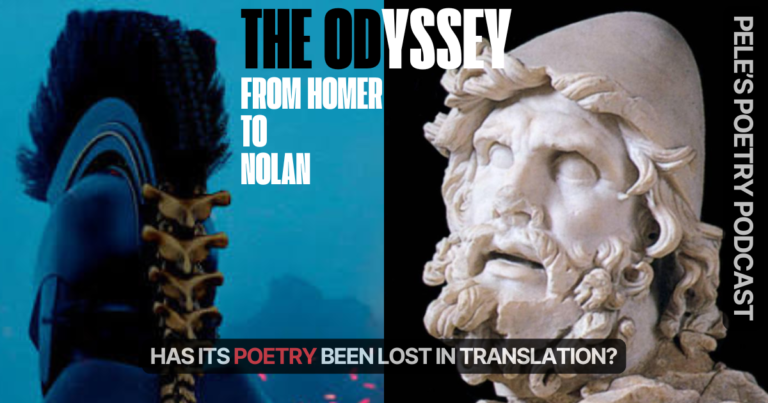
Delighted to announce that I’m co-hosting a series of talks on poetry with the poet Pele Cox. I’ll make sure I post each episode here as we record it. Or you can check out the programme website or sign up through your usual podcast provider. Just search for Pele’s Poetry Podcast.

Recent episodes

Photojournalist Don McCullin reflects on war and rural Somerset

Richard Uridge interviews the photojournalist, Don McCullin, in his Somerset home for BBC Radio 4’s Open Country programme. Produced by Hugh O’Donnell.

Like many journalists of my generation I’ve had a fascination with the work of the press photographer Don McCullin for my whole career. Each of his images manages to tell a story that us writers would struggle to convey in a thousand words.

Photo: Don McCullin/Contact Press Images

So I was beyond excited to interview him for BBC Radio 4’s Open Country programme a few years back. And fascinated to be reminded of his image of a lone Cuban missile crisis protestor in London from 1962 in the Guardian newspaper – “It’s been a cessit, really, my life”: war photographer Don McCullin on 19 of his greatest pictures.

It didn’t just tell a story then. It speaks to us now. Not least how the nature of protest has both changed and stayed the same. Juxtapose this image in your head with a contemporary one from the front line of protests in London now. And remember front lines aren’t always in war zones.

When I first posted this I promised to see if I could dig out the audio from my interview with him. Thanks to a very helpful producer at the BBC I’ve managed to secure a copy. I hope you’ll agree it makes a fascinating listen. Copyright, of course, remains with the BBC for who I am grateful for allowing me to share this programme first broadcast on January 22nd 2005.

You might also be interested to read this Guardian article from 9th October 2025 headlined ‘Somerset saved my sanity’: Don McCullin at 90 – in pictures

The last bedroom on the right

There is no past
Remembered
Or future
Imagined.
Just the present.

Tense.

A singularity.

You live in the moment. Very on point as they say.
Content (or so I hope) sucking tea from a sippy cup
Or shredding tissues in your lap

While I am walking an imaginary dog (the one I was convinced would persuade you to let me have a real one for my 13th birthday)
Searching for something
Like a long forgotten book
Cursing that it’s always in the last place you look
And hearing you laughing
In that slightly hurtful grown up way of yours:
Of course it is! Because when you find it
You stop searching.

Finding something, I say: Remember that time…
…before trailing off.
Both of us lost to thought.


Three years since my mother, Sheila, died after she was brutally beaten by another resident in her Luton carehome. Memories of happier visits before that day are still vivid. It is possible to live well with dementia. But it’s a bastard disease for those who watch the fading of the light.

Augur

Though August’s barely halfway through
The copse is clad in autumn’s hue
Its summer greens now fading fast
And taking on a rusty cast.

Embroidered by the evening sun
The trees from threads of gold were spun
But in the furnace split and cracken
And dieback tips of ash twigs blacken.

Limp limbs hang from peels of bark
The heartwood dry and much too dark.
Blackthorn sloes - peas - shrivelled slim
Won’t stiffen up the Christmas gin.

And conkers spilt from cankered cases
Too small for boys to string on laces.
Once shiny pebbles dulled by dust
The stream bed still, the silt now crust.

Yet though the drouth fires rage infernal
A shoot of green, spring hopes eternal.

Where non-believers pray

Scene one: a cubicle in A & E

For what is death
If not escape
From pain in this world
And promise in the next?

The words sermon-like. Disembodied. A narrator.
A bed of music. Pings and beeps. The baseline drone of a ventilator.

The curtains close to end the scene.
The cast, dressed in scrubs of blue and green,
Exit stage left
While the leaving lady has a costume change
The audience, not expecting this plot twist, wide-eyed, bereft

Scene two: the family room

An anteroom with a bed-come-trolley
A single moulded plastic seat
A crate of children’s toys and, legs and arms in supplication, a plastic dolly.
An Egyptian mummy (from Finchley)
Swabbed and swaddled visual sterilisation.
What you came in bagged for crime scene investigation
Or soiled clinical waste marked for incineration.
You in sweet repose
Beyond caring if you’re wearing (remember what you used to say) fresh underwear in case of hospitalisation.

Me one third of an unholy trinity
Mother, son and daughter
In communion no wine
Just bread white sheets
Dipped in blood which never looked brighter
And the powder blue lid
On a fluted plastic jug of water
Served at side room temperature
From a stack of flimsy see through cups
That don’t resist
The clench of a tight-balled fist
Because we’re holding on so tight
Under the migraine flicker of fluorescent light

(Low hum)

For fear of losing grip
And letting all this slip…

A simple wooden cross
A side table
A bible with an unsticking plaster “do not remove” label
Some leaflets about loss
And a phone connected by a tiny silver rosary chain
To a laminated card: to speak to the chaplain
Press 0 and ask reception

Go on I say
Let’s order up a resurrection
In the family chapel where even the non-believers pray
And laugh in the face of death because all tears are from the same saline dissolution

Drip, drip, drip until the end of day.  

Scene three: a hospital mortuary

The unusually dead are portered to their unmaker for dissection
Pathologists weigh your innards, slice your brain
Sluice your fluids down the drain.
Leaving you unmade. Bits worn. Bits broken. A catalogue of parts.
Coronary sclerosis stilled your no longer beating heart
That and the awful, unstoppable arc
Of an upturned walking stick
In the two handed grip
Of geometry and physics (them and Mrs Clarke)
Her unspeakable role. And your last words: I feel sick
Recorded on a high res vid on the hi viz vest
An end of life jacket. I’ve watched this bit a thousand times, know the rest…

Captains Courageous. Spencer Tracy
Yea-ho little fish, don’t cry, don’t cry.
Yea-ho little fish, don’t cry.

Back at the surface, fighting for breath
Is this what they mean by a living death?
Slabbed and gutted in a different way.
Twisting and turning from the scalpel
But no less eviscerated.

A Shropshire Symphony Revisited

Five years ago it felt like the world had momentarily stopped spinning. The nightly Covid bulletins aside, everything seemed preternaturally silent. Planes stayed on the ground. Traffic halted. And without the usual din of everday life (and later the weekly clap for carers) we began to notice sounds that had always been there but were drowned out by human activity.

I don’t miss the pandemic. But I do miss properly listening to nature. So it gave me great pleasure to dig out this symphony of sounds I recorded in my back garden during lockdown.